Description
Exochorda racemosa 'Blushing Pearl®' Staked | Pearlbush
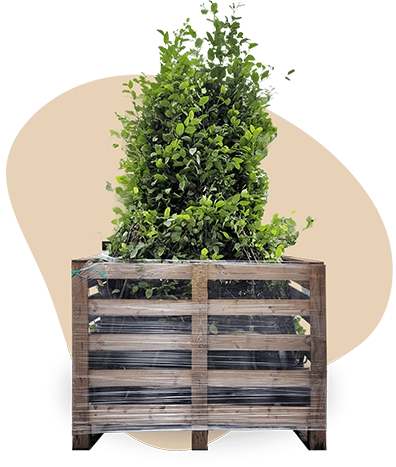
A standard Pearlbush brings the flowering beauty of Exochorda racemosa 'Blushing Pearl®' into a clear, elevated form. This Pearlbush is trained as a standard, with a raised crown on a single stem rather than a low, spreading shrub shape. The result is an upright and bushy plant with a distinct silhouette that can be seen clearly in a border, container or specimen position. It reaches approximately 200 cm in height. The foliage is green and deciduous, so the plant changes with the seasons and is not evergreen. In May and June, the crown is covered with abundant white flowers. Before opening, the flower buds are pink, adding another layer of colour to the display. The raised flowering crown gives this standard shrub a refined garden image while keeping the ground-level footprint visually clear. It works well as a specimen plant where its structure and seasonal flowering can be appreciated from different angles. As part of the exochorda genus, it offers a distinctive standard form for gardeners who want more than a shrub growing from the base. This product is a deciduous broadleaf shrub in standard form, with its upright growth and elevated crown defining its appearance.
Key features of Pearlbush (Exochorda racemosa 'Blushing Pearl®') in standard form
- White flowering display: The flowering is very showy, with abundant white blooms in May and June. The flowering period is relatively short, but the pink buds provide interest before the flowers open.
- Green deciduous foliage: The foliage is green and deciduous. It provides a simple leafy background for the white flowers and means that the plant is not evergreen.
- Light and soil: This standard Exochorda grows in full sun or partial shade. Choose well-drained, humus-rich and slightly moist soil. The ground should be fertile and moist without remaining poorly drained or persistently waterlogged, which is especially useful to consider in often wet UK gardens.
- Growth and form: The plant has an upright, bushy shrub habit shaped into a standard form. Its crown is raised on a single stem, creating a clear vertical structure and an elevated flowering display rather than the lower outline of a shrub grown from the base.
- Garden category: With its white flowers and shrub habit, it is a natural choice among white-flowering shrubs. Its raised crown also gives it a different visual role from a standard shrub that spreads at ground level.
Uses of the standard Pearlbush in the garden
- Specimen planting: Use the standard Pearlbush as a visible specimen plant in a border, on a patio or in a container. The single stem lifts the crown above nearby planting, allowing the form and flowers to remain easy to see.
- Borders and group planting: In a border, the raised crown adds vertical structure without creating the broad base of a shrub grown from the ground. Group planting can give a clear repeated shape while keeping the flowering display at a noticeable height.
- Containers and patios: This flowering standard is suited to a container or patio position where its elevated silhouette can act as a defined accent. It can also be used alongside container plants, provided the crown remains visually open.
- Hardiness and seasonal value: The plant is hardy to approximately -28.9°C to -23.3°C, USDA zone 5. Its main seasonal display comes from the abundant white flowers emerging from pink buds in May and June, followed by green deciduous foliage.
- Plant combinations: Combine it with lower border plants or restrained ground-level planting so that the raised crown remains visible. Border plants, container plants and other ornamental shrubs can support the structure without hiding the elevated flowering display.
The strongest ornamental value of this standard Pearlbush lies in the balance between its raised crown and its seasonal flowers. The single-stem structure adds height and definition while leaving a relatively clear space at ground level. This makes Exochorda racemosa 'Blushing Pearl®' standard useful where a border, patio or container needs a refined focal point rather than another low-growing shrub. For gardeners seeking white spring flowers with an elevated ornamental structure, it is a strong choice for a border, container or specimen position.