Description
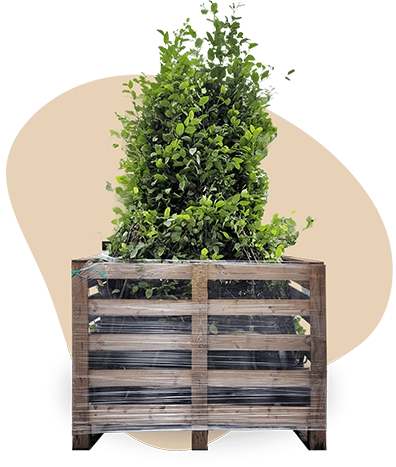
Albizia julibrissin 'Ombrella' standard tree 80 cm C7,5 | Silk tree
The silk tree standard is Albizia julibrissin 'Ombrella', supplied in a distinctive standard-tree form. Also known as the Persian silk tree, it has an upright stem with an elevated, parasol-shaped crown. This raised structure gives the tree a clear silhouette and a strong focal point, rather than the lower shape of a shrub. The crown carries elegant, finely divided, feather-like green foliage and fragrant pink and white flowers. It is richly ornamental when in bloom and brings a light, open character to a sunny garden or patio. The supplied tree can reach an approximate mature height of 4.5 metres. No mature width is specified. As a deciduous broadleaf tree, it loses its leaves in winter. In the UK, this silk tree standard is frost-sensitive and should be treated as a tender specimen. A sunny, sheltered position is important, with protection from cold winds. Its raised form makes it suitable as a solitary feature in a garden, or as a specimen in a pot on a patio or terrace. The cultivar name 'Ombrella' remains unchanged and refers to this particular cultivated form, supplied here as a standard tree.
Key features of the silk tree (Albizia julibrissin 'Ombrella')
- Rich summer flowering: This is a richly flowering and highly ornamental standard tree. Fragrant pink and white flowers appear in July and August, creating a noticeable display above the raised stem.
- Elegant deciduous foliage: The leaves are green and finely divided, with a delicate, feather-like appearance. This broadleaf foliage gives the parasol-shaped crown a light and refined texture before the leaves are lost in winter.
- Position and soil: Choose full sun and a sheltered position, away from cold winds. It grows best in well-drained, humus-rich soil that remains lightly moist. The soil should have an open structure, with free drainage and no waterlogging.
- Standard-tree shape: The upright stem carries the elevated, parasol-shaped crown. This creates a raised focal point and leaves open space beneath the canopy, making it suitable for a patio or terrace when grown in a pot. The plant is also a useful choice within standing trees.
Uses of the silk tree standard in the garden
- Specimen planting: Use this silk tree standard as a specimen tree in a sunny, sheltered part of the garden. Its elevated crown gives the planting a clear vertical accent while keeping the overall shape open and distinctive.
- Patio and container use: The standard-tree form works well on a sunny patio or terrace, and it can be grown in a suitable container. The raised crown gives height without filling the lower space with dense growth, which suits areas where the tree needs to remain a clear feature.
- Frost-sensitive character: This plant is frost-sensitive, with a supplied tolerance range of approximately -17.8°C to -12.2°C and USDA zone 7. These figures should be considered carefully for UK gardens. A sheltered position and protection from cold winds are important, especially where wet winters and exposed conditions may be an issue.
- Open planting beneath the crown: The elevated, parasol-shaped crown creates open space below the canopy. It can therefore be combined with lower-growing ornamental planting or patio planting, allowing the flowering crown to rise above the planting around it.
- Distinctive ornamental value: The main attraction is the combination of fragrant pink and white summer flowers, finely divided green foliage and the raised parasol-shaped crown. Together, these features create a clear silhouette that differs from a low-growing plant.
With its upright stem and open crown, this standard silk tree creates a distinctive flowering focal point for a sunny, sheltered UK garden, patio or terrace.