Description
Corylus avellana 'Red Majestic' standard tree 80 cm C7,5 | Contorted hazel tree
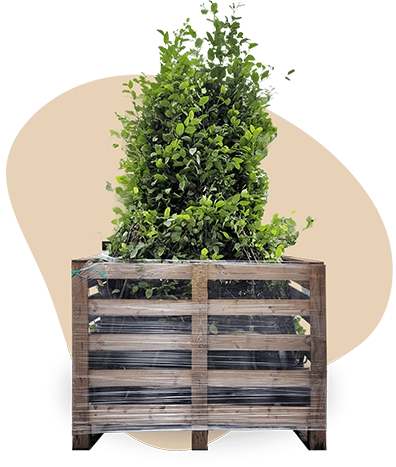
The red-leaved contorted hazel standard is Corylus avellana ‘Red Majestic’, also known as a contorted hazel tree. This ‘Red Majestic’ cultivar combines twisted branches and red foliage with a clear stem and raised crown. Unlike a shrub-form contorted hazel, the standard form lifts the ornamental framework above the ground and creates a clear, upright silhouette. The branches have a decorative, corkscrew-like structure, while the hazel foliage appears in red, dark red and green tones. Yellow and red catkins appear early in the season, adding interest before the leaves return. This is a deciduous plant, so it loses its leaves in winter and reveals the twisted branch pattern more clearly. It can reach approximately 250 cm at maturity. Its upright and contorted growth makes it suitable as a specimen plant in a UK garden, including a border, small garden, patio or container. The raised crown also gives useful vertical presence without creating the same visual footprint as a shrub. As part of the corylus range, it offers a distinctive ornamental form for gardeners looking for a red-leaved corkscrew hazel or Harry Lauder’s walking stick in standard form.
Key features of the contorted hazel tree (Corylus avellana ‘Red Majestic’)
- Raised standard form: A clear stem supports a raised crown with an upright, twisted branch structure. This displays the contorted framework above the stem and gives the plant a more elevated, space-efficient silhouette than the same cultivar grown as a shrub.
- Foliage and catkins: The deciduous hazel foliage combines red, dark-red and green tones. Yellow and red catkins appear in February and March, creating an early seasonal display before the plant becomes fully leafy.
- Position: Full sun or partial shade is suitable. A sheltered position is recommended for the elevated crown and twisted branches, particularly in gardens exposed to changing UK weather and wind.
- Soil: Use rich, humus-rich, fertile soil that remains lightly moist without becoming waterlogged. Good drainage and an open soil structure are important, especially where wet conditions may persist.
- Growth and branches: This upright, contorted ornamental shrub has been trained into a standard form. The decorative branch pattern is the main structural feature, with the twisted branches clearly displayed above the stem.
- Patio use: The standard is suitable for a patio or terrace in a container when the container and growing conditions support the plant. It is also a natural choice for the standing trees category, where its raised crown gives a strong vertical feature.
Uses of a red-leaved contorted hazel standard in the garden
- Specimen planting: Use this red-leaved contorted hazel standard as a focal plant in a border or small garden. The clear stem lifts the crown into view, while the twisted branches give the plant a strong individual character.
- Patio and terrace: Its raised form works well as a container feature on a patio or terrace. The crown adds height without spreading across the same visual space as a shrub-form hazel, making the plant useful where space is limited.
- Seasonal interest: The twisted branch structure remains an ornamental feature when the plant is leafless in winter. Red, dark-red and green foliage then provide seasonal colour, followed by yellow and red catkins in February and March.
- Hardiness: The supplied hardiness range is approximately -28.9°C to -23.3°C, equivalent to USDA zones 5 to 6. This should be used as a guide, as performance can vary between UK gardens and local microclimates.
- Plant combinations: Pair the standard with lower-growing plants that leave the clear stem, raised crown and twisted branches visible. Ornamental shrubs, perennials, grasses and seasonal bedding can provide a lower layer while keeping the standard as the focal structure.
- Garden structure: The standard form adds height and clear vertical structure without occupying the same visual space as a shrub. It therefore suits specimen planting, containers, patios, terraces, borders and smaller gardens.
With its elevated crown, red foliage and unusual twisted branches, this standard form is an ornamental focal plant for UK gardens, patios, terraces, borders and containers.