Description
Hibiscus syriacus 'Eruption' half-standard 90 cm C10 | Rose of Sharon
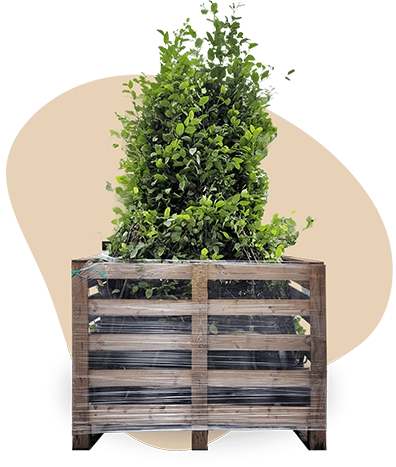
The Rose of Sharon half-standard is Hibiscus syriacus ‘Eruption’, offered in a raised half-standard form. Its clear stem supports a crown, creating an upright, tree-like silhouette rather than the low shrub habit of a plant grown from ground level. Also known as Rose of Sharon, this flowering shrub brings pink and purple flowers to the garden from July to September. The green leaves are deciduous, so the plant is not evergreen. With an eventual height of approximately 200 cm, it gives a border, pot or terrace a raised point of interest. The upright growth and crown-forming structure also make it easy to view the flowers and foliage above lower planting. A sheltered position is desirable, especially in exposed UK gardens. This plant belongs to hibiscus and keeps the official cultivar name ‘Eruption’. It is a hardy flowering garden shrub, suited to gardeners who want a defined feature plant with seasonal colour. The half-standard form gives the plant a more elevated presence than a shrub grown from the ground, while its deciduous character keeps the focus on its summer flowering period and clear garden structure.
Key features of Rose of Sharon (Hibiscus syriacus ‘Eruption’)
- Prominent summer flowering: The flowers are pink and purple, with abundant flowering from July to September. This long flowering period gives the plant strong seasonal value as a flowering feature plant.
- Deciduous green foliage: The plant has green deciduous leaves. The foliage supports the upright crown during the growing season, while the plant’s seasonal character means it should not be treated as an evergreen shrub.
- Sun or partial shade: Choose a position in full sun or partial shade. A sheltered place is preferred, particularly in exposed UK gardens, so the raised crown has a more protected setting.
- Moisture-retentive, well-drained soil: Rose of Sharon grows in humus-rich, slightly moist soil that retains some moisture without becoming waterlogged. Good drainage and an open soil structure are important, especially in the often wet UK climate.
- Distinctive half-standard structure: The raised stem leads to a crown-forming top and gives this half-standard plant an elevated, tree-like outline. It is suitable for a pot or terrace as well as for a border, and is listed among flowering shrubs.
Uses of Rose of Sharon half-standard in the garden
- Feature plant or solitary planting: The Rose of Sharon half-standard works well as a feature plant or solitary plant in a border. Its raised crown adds height and helps create a clear vertical focal point without taking the form of a low, ground-level shrub.
- Suitable for pots and terraces: The raised structure gives this plant a strong presence in a pot or on a terrace. It can bring a flowering shrub into a defined space where the crown can be viewed clearly above the container or surrounding planting.
- Hardy for UK gardens: The plant is hardy to approximately -28.9°C to -23.3°C, corresponding to USDA zone 5. This is a general hardiness indication, and a sheltered position remains preferable for UK gardens, particularly where the site is exposed.
- Useful with lower planting: Combine the half-standard form with lower planting that does not hide the raised crown. Border plants and other container or terrace planting can support the vertical structure while leaving the stem and crown visible.
- Seasonal ornamental value: Its main appeal comes from the combination of abundant pink and purple flowers, the long flowering period from July to September and the elevated crown. The green foliage adds structure during the growing season, but the plant is deciduous rather than evergreen.
This Rose of Sharon half-standard is particularly suitable for gardeners seeking a flowering focal point with a raised crown for a border, pot or terrace.