Description
Hibiscus syriacus 'Flower Tower Purple' feathered 150-175 cm C10 | Rose of Sharon
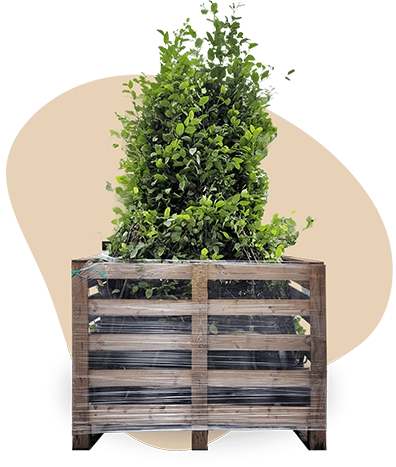
Rose of Sharon feathered form is Hibiscus syriacus 'Flower Tower Purple', known in the UK as Rose of Sharon or Shrub Althaea. This is the feathered form of the 'Flower Tower Purple' cultivar, trained to create a clearly upright, compact and columnar silhouette. Its structured arrangement of branches gives the plant a defined vertical presence, while keeping its overall shape suitable for smaller gardens. At maturity, it reaches approximately 250 cm in height. The green leaves are deciduous, so the plant loses its foliage in winter and develops new leaves relatively late in spring. From July to September, it produces purple flowers, creating a strong summer display. The combination of green foliage, late-summer colour and a narrow outline makes it useful where vertical structure is wanted without taking up excessive space. This Shrub Althaea benefits from a sunny or partially shaded position. It grows best in well-drained, humus-rich and slightly moist soil, where moisture is retained without becoming waterlogged. Fruit is present, but it is not the main ornamental feature. As a shrub from the hibiscus genus, this Rose of Sharon offers a practical choice for adding height and colour in a compact, carefully structured form.
Key features of Rose of Sharon (Hibiscus syriacus 'Flower Tower Purple')
- Flowers and foliage: This is a highly floriferous and visually striking shrub. Purple flowers appear from July to September, above green deciduous foliage. The leaves fall in winter, with new foliage developing relatively late in spring.
- Growth and form: In feathered form, the plant has a narrow, upright and columnar silhouette with a deliberately structured arrangement of branches. It reaches approximately 250 cm at maturity and gives a more defined vertical presence than a loose shrub form. This makes it suitable for smaller spaces.
- Position and soil: Choose full sun or partial shade. The plant prefers well-drained, humus-rich and slightly moist soil. Good drainage and an open, well-aerated soil structure are important, so avoid poorly drained conditions and waterlogging.
- Garden category: Its purple flowers and compact growth make it a useful choice among flowering shrubs. It can bring vertical structure to a border without requiring the space of a broad-growing shrub.
Uses of the Rose of Sharon feathered form in the garden
- Specimen planting: The Rose of Sharon feathered form works well as a specimen plant. Its columnar outline creates a clear focal point, while the purple flowers add colour from July to September.
- Borders and small gardens: This compact Rose of Sharon provides height and structure in a border without spreading widely. Its space-conscious form is especially useful in a small garden where a strong vertical accent is needed.
- Containers: The feathered form is suitable for container planting where compatible. Its upright shape gives definition to a terrace or another garden area, while the green foliage and purple flowers provide seasonal interest.
- Hardiness and combinations: The plant is hardy to approximately -28.9°C to -23.3°C, corresponding to USDA zone 5. A sheltered position can be useful in exposed UK gardens. Combine it with lower-growing perennial planting, compact shrubs or other border plants that complement its upright silhouette and purple flowers.
The main ornamental value lies in the balance between its compact vertical silhouette, green deciduous foliage and abundant purple flowers in late summer. This hardy Rose of Sharon can add height without overwhelming a relatively small planting area, whether used alone, in a border or in a container. The feathered form is a strong choice for adding a compact vertical accent and late-summer colour to a UK garden.