Description
Hibiscus syriacus 'Woodbridge' half-standard 90 cm C10 | Rose of Sharon
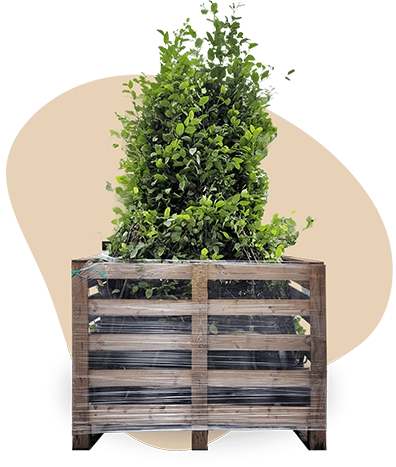
A half-standard Rose of Sharon brings the flowering character of a shrub into a more tree-like garden shape. This is Hibiscus syriacus 'Woodbridge', also known as Rose of Sharon or Shrub althea, supplied in a half-standard form. Its raised crown gives the plant a clear silhouette above the lower stem, while the crown keeps the upright, bushy growth habit of the shrub. At maturity, it reaches approximately 250 cm. The foliage is green and deciduous, so the plant loses its leaves for part of the year. Leaf development can be late in the season, which is a normal seasonal characteristic of this plant. From July to September, it produces pink flowers with a red centre, creating a long summer display. The flowers are not scented. As a member of the hibiscus genus, it retains the ornamental character expected from a flowering shrub, but its raised form gives it extra structure. This makes the half-standard Rose of Sharon useful where a flowering crown should sit clearly above surrounding planting. It can also help create a strong garden outline without relying on the wider appearance of an ordinary shrub.
Key features of the half-standard Rose of Sharon (Hibiscus syriacus 'Woodbridge')
- The half-standard structure presents the flowering crown above a clear lower stem. This creates a raised, tree-like outline while retaining the upright and bushy character of Hibiscus syriacus 'Woodbridge'. The form can add visual structure where a raised flowering crown is preferred.
- The plant has a prominent, richly flowering display from July to September. Its pink flowers have a red centre, with flowers appearing in July, August and September. This gives the garden a long flowering period during summer.
- The foliage is green and deciduous. Leaf development is late, so the plant may come into leaf later than some other garden plants. No specific leaf shape is provided for this cultivar.
- Choose a position in full sun or partial shade. The soil should be well drained, humus-rich and slightly moist, with an open structure that retains some moisture without becoming waterlogged. These qualities are especially useful in the often wet conditions of UK gardens. This plant is also a suitable choice to explore among flowering shrubs.
- Hardiness is approximately -28.8°C to -17.8°C, corresponding to USDA zones 5–8. Local exposure and garden conditions can still affect how plants experience winter. A sheltered position may be sensible in exposed UK gardens, although no specific wind-resistance claim is made.
Uses of the half-standard Rose of Sharon in the garden
- Use this half-standard Rose of Sharon as a specimen plant where its raised crown can act as a clear focal point. It can also be placed in a border, where the elevated flowering form adds height and structure without relying on a spreading shrub silhouette.
- The plant is suitable for group planting where several raised crowns can give a planting area a consistent outline. It may also form part of a hedge where suitable, although the half-standard structure makes its visual role different from that of a conventional hedge shrub.
- Its raised form is useful in smaller gardens and can also suit a patio pot where appropriate. The clear lower stem and elevated crown help create vertical presence while keeping the flowering display easy to see within the garden layout.
- Pair it with compatible sun- or partial-shade plants that prefer well-drained, humus-rich soil. Flowering shrubs, herbaceous border plants and other structural garden plants can provide suitable planting groups around the half-standard crown.
- The main ornamental value is the pink, red-centred flowering display from July to September. Its long summer flowering period is supported by a position in full sun or partial shade and soil that remains slightly moist but drains well.
- This Rose of Sharon is hardy to approximately -28.8°C to -17.8°C, or USDA zones 5–8. Local exposure and conditions still matter, particularly in gardens affected by colder or wetter winter weather.
The half-standard Rose of Sharon is a strong choice for adding a late-summer flowering focal point and vertical structure to a UK garden.