Currently unable to ship orders to the United Kingdom

Updated on 7 April 2026

We regret to inform you that we are currently unable to ship orders to the United Kingdom. We apologise for the inconvenience.

Fallopia baldschuanica Staked

Russian vine
Temporarily sold out

  • Temporarily sold out
Helpdesk
Benefits according to our specialist
  • Produces abundant flowers
  • Fast-growing
  • Suitable for pergolas and fences
  • Attracts bees
  • Tolerates pruning
  • Spreads very vigorously
  • Loses its leaves in winter

Plant features Fallopia baldschuanica Staked

Russian vine


Description Fallopia baldschuanica Staked | Russian vine

Standard Russian vine is the standard-trained form of Fallopia baldschuanica gestokt, also known locally as Russian vine, Mile-a-minute or Silver lace vine. It combines a raised, structured presentation with the strong climbing character of this vigorous plant. The lifted form creates a clear focal silhouette, while the upper growth remains upright, spreading and fast-growing. Green leaves provide the foliage, followed by fragrant white to pale pink flowers from July to October. This long flowering period gives the plant strong seasonal interest in a UK garden. Under suitable conditions and with firm support, it can reach approximately 12 metres in height. It is deciduous, so it is not evergreen. This is not a compact or slow-growing plant. Its vigorous growth can extend beyond the intended area and may outgrow nearby planting if it is not controlled. Regular pruning is therefore important for keeping the raised shape clear and balanced. A sturdy pergola, fence, trellis or suitable facade structure is essential. The standard-trained form gives the plant a more defined garden presence than a free-growing climber, but it still needs space and strong support for its spreading growth.

Key features of Russian vine (Fallopia baldschuanica gestokt)

  • Flowering: This is a prominent, richly flowering climber. Its fragrant white to pale pink flowers appear from July to October, offering a long season of colour and scent.
  • Foliage and wildlife: The plant has green foliage. The leaf shape is not specified. The flowers are attractive to bees, making it a useful choice for gardeners seeking a bee-friendly flowering climber.
  • Aspect and soil: Choose full sun or partial shade. It grows in all soil types when the soil is fertile, well drained and lightly moist. Good drainage is important, especially in the wet conditions that can occur in UK gardens.
  • Growth and structure: This is a fast-growing and very vigorous climbing plant. The standard-trained form creates a raised visual structure, but the upper growth remains upright and spreading. Firm support and regular pruning are needed to maintain the intended shape and prevent nearby planting from being overgrown.
  • Garden category: With its white to pale pink flowers and strong climbing habit, this plant fits naturally within flowering climbing plants. A sheltered position is recommended because no specific wind rating is supplied.

Uses of a standard Russian vine in the garden

  • Pergolas and trellises: A standard Russian vine can be used on a pergola or trellis where a sturdy support is available. The raised form adds height and creates a clear focal point, while the vigorous climber provides generous seasonal coverage.
  • Fences and facade greening: It can bring flowering growth to a suitable fence or facade structure. The support must be firm enough for a climber that can reach approximately 12 metres under suitable conditions.
  • Specimen use: The standard-trained presentation works well as a specimen where its elevated shape can be seen clearly. It adds vertical interest and fragrant flowering without presenting the plant as a compact shrub or slow-growing tree.
  • Hardiness: The plant is listed as hardy to approximately -23.3°C to -17.8°C, corresponding to USDA zone 6. This gives useful guidance for UK gardens, but local exposure still matters. A sheltered position and strong support are sensible, particularly in wet or exposed sites.
  • Plant combinations: Combine it only with plants that can tolerate a vigorous climber, leaving enough room for growth. Structural garden plants and robust climbing or supporting planting may work where their growing requirements are compatible.

The main ornamental value lies in the fragrant, abundant white to pale pink flowering from July to October, together with the elevated structure of the standard-trained form. It suits gardeners who want a fragrant flowering focal climber and can provide strong support and regular pruning.


Planting & care Fallopia baldschuanica Staked (Russian vine)

We would like to provide some tips on how to plant and care for a Fallopia baldschuanica Staked. By following these tips, you can be sure to enjoy your Russian vine for a long time.

Ideal placement of a Fallopia baldschuanica Staked (Russian vine)

Fallopia baldschuanica Staked grows best in full sun or partial shade. Choose fertile, humus-rich soil that retains some moisture but drains well, as waterlogged ground can damage the roots. Provide a sturdy support and enough room for its vigorous climbing growth, preferably in a position sheltered from strong winds.

How do I plant a Fallopia baldschuanica Staked (Russian vine)?

Plant in autumn or spring when the soil is workable and not frozen or waterlogged. Loosen the soil, add compost if it is poor, and dig a planting hole wider than the root ball; plant at the same depth as it was previously growing. Water thoroughly after planting and tie the young stems loosely to the support, ensuring that the structure is strong enough for the mature climber.

Pruning a Fallopia baldschuanica Staked (Russian vine)

Prune in late winter or early spring before new growth begins, removing dead, damaged or weak stems first. This vigorous climber tolerates hard pruning, so overgrown plants can be cut back strongly to keep them within bounds. During the growing season, guide or shorten unwanted shoots as necessary and check that stems remain attached to their support.

Watering a Fallopia baldschuanica Staked (Russian vine)

Water thoroughly after planting and keep the soil evenly moist during the first growing season. Once established, the plant usually copes with normal garden conditions, but it benefits from watering during prolonged dry spells. Container-grown plants dry out more quickly and need regular checks, while consistently waterlogged soil should be avoided.

Fertilising a Fallopia baldschuanica Staked (Russian vine)

Apply a balanced general-purpose fertiliser in spring if the soil is poor or growth is weak. A mulch of well-rotted compost can improve soil structure and provide a gentle supply of nutrients. Avoid excessive high-nitrogen fertiliser, which can encourage overly soft, vigorous growth at the expense of manageable form.

The characteristics of a Fallopia baldschuanica Staked (Russian vine)

Fallopia baldschuanica Staked is a very vigorous deciduous climber suitable for covering trelliswork, walls, fences and other strong supports. It produces masses of small white flowers in airy sprays, usually from summer into autumn, and can provide useful late-season nectar for insects. Its rapid growth means that regular guidance and pruning are important, particularly in smaller gardens.

Separating/dividing a Fallopia baldschuanica Staked (Russian vine)

Dividing is not a usual or practical maintenance method for Fallopia baldschuanica Staked because it is a woody climbing plant. Propagation is more commonly carried out from suitable stem cuttings or by layering. Established plants are normally kept in place and controlled through pruning rather than divided.

Frequently Asked Questions Fallopia baldschuanica Staked (Russian vine)

What will be the height of Fallopia baldschuanica Staked?

Given a suitable support and favourable conditions, Fallopia baldschuanica Staked can become a very large climber, commonly reaching several metres in height and potentially around 10 metres or more. Its final height depends greatly on pruning, support and growing conditions.

What will be the width of Fallopia baldschuanica Staked?

It can spread widely as its long stems extend across a support, with the ultimate width depending on pruning and the available structure. Allow generous space and trim it regularly if it is being grown in a confined area.

Which soil type is most suitable for the Fallopia baldschuanica Staked?

It prefers fertile, humus-rich and reasonably moisture-retentive soil that drains well. It is adaptable to many ordinary garden soils, but performs poorly in persistently waterlogged ground.

What is the ideal positioning for the Fallopia baldschuanica Staked?

A position in full sun or partial shade is suitable, ideally with shelter from strong winds and a sturdy support. Good light encourages flowering, while some shade is tolerated if the soil does not become excessively dry.

What is the flowering colour of the Fallopia baldschuanica Staked?

The flowers are usually small and white, appearing in loose, cloud-like sprays. They are individually modest but make a noticeable display when the plant is in full bloom.

What is the flowering time of the Fallopia baldschuanica Staked?

It generally flowers from summer into autumn, with the exact timing varying according to the climate and growing conditions.

Is the Fallopia baldschuanica Staked hardy?

Yes, it is generally hardy in the UK when planted in the ground and given a suitable position. Young plants and container-grown specimens can be more vulnerable in severe or prolonged cold, so protect the pot and root ball if necessary.

Is the Fallopia baldschuanica Staked evergreen?

No. Fallopia baldschuanica Staked is deciduous and loses its leaves in autumn, then produces fresh growth in spring.

What is the growth strength of the Fallopia baldschuanica Staked?

It is a very vigorous and fast-growing climber once established. Regular training and pruning are often needed to prevent it from overwhelming nearby plants, structures or gutters.

What kind of bark does the Fallopia baldschuanica Staked have?

It does not develop a prominent ornamental trunk or decorative bark like a tree. Its older climbing stems become woody and brown, while younger shoots are more flexible and greenish.

Is Fallopia baldschuanica Staked poisonous?

Warning: This plant may contain toxic substances. Ingestion of any part of the plant or contact with its sap may pose health risks, particularly to children and pets such as cats and dogs. We recommend keeping the plant out of reach of children and animals and wearing protective gloves when carrying out maintenance work, such as pruning or transplanting. If poisoning is suspected, seek immediate medical or veterinary advice. This information is provided as a general safety notice.

It can be grown in a large, sturdy container for a period, provided it has excellent drainage and a strong support. Container plants need more frequent watering and feeding, and their roots require protection from severe winter cold. Because of its vigorous growth, long-term container cultivation requires regular pruning and eventual repotting or root management.
Packaged with love, for you! Our plant packaging

At Heijnen Plants, we value strong packaging just as much as strong plants. That’s why we use sustainable, water-resistant packaging made from rPET plastic: a lightweight, fully recyclable material that has already had a second life. These packages protect the plants during transport from damage and dehydration.

Learn more
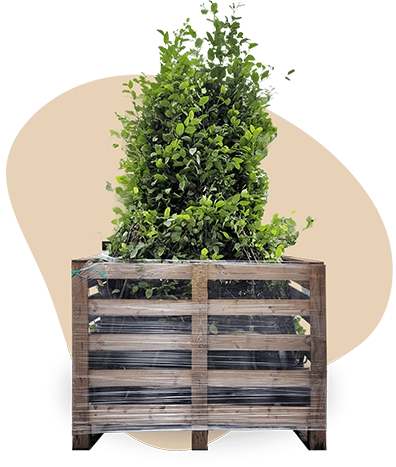
Pallet
Hedge plants, trees, large plants and grass

If you have ordered large-sized plants or trees, we deliver them on sealed pallets and place them around your house or driveway. The pallets are sturdy and provide optimal protection for large-sized plants.

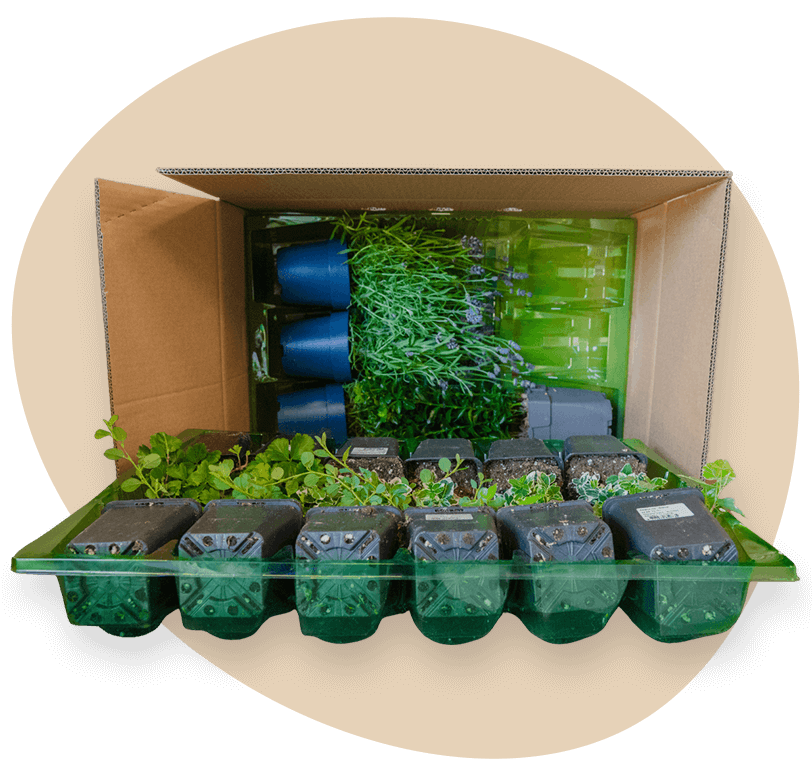
Verpakkingen
Small to medium-sized plants

We deliver small or medium-sized plants in boxes. The size of the box depends on the size of the plant. We always make sure that the plant has enough space but still stands firmly in the box, so it cannot be damaged during transport.

The ideal variety for you

Buy Fallopia baldschuanica Staked

Russian vine (Fallopia baldschuanica) trained on a stake is a vigorous, richly flowering climber for pergolas, fences and trellises. Its white to pale pink flowers appear from July to October and attract bees. This deciduous plant tolerates pruning, but needs sturdy support and regular maintenance due to its vigorous growth. Order online for your garden.
Personal advice from
our specialists?
We are happy to help you!
Helpdesk