Description
Euonymus alatus | Winged spindle
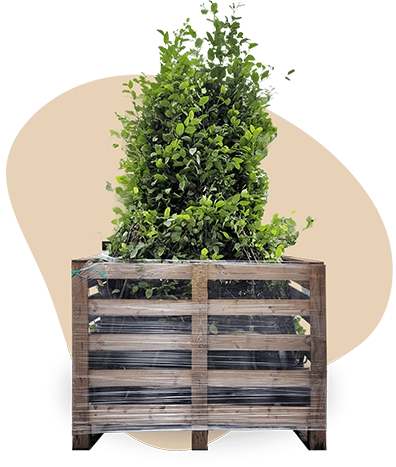
Winged spindle, Euonymus alatus, is a hardy deciduous shrub with an upright, bushy and spreading habit. It branches from low on the plant, creating a full shape rather than a raised crown or tree-like form. It reaches an approximate mature height of 2.5 metres. The green foliage provides seasonal interest through spring and summer before changing to a vivid red in autumn. This strong autumn colour is one of the shrub’s main ornamental features. Its common name refers to the distinctive corky wings that develop along the branches. These ridges remain an attractive structural detail when the leaves fall, giving the plant interest through winter. Subtle greenish-yellow flowers appear in May and June. They are not the main display, but add another seasonal detail to the shrub. Decorative fruit follows and can remain visible among the branches. The fruit and other parts of the plant are toxic if ingested. As a deciduous shrub, the winged spindle loses its leaves in winter and reveals its branching structure. Once established, it is low maintenance and suits UK gardens in borders, mixed planting, hedging or as a specimen shrub. As part of the euonymus group, it brings a broad, lower-level presence to the garden rather than the narrow silhouette of a trained tree.
Key features of winged spindle (Euonymus alatus)
- Seasonal foliage: The broad seasonal foliage is green during the growing season and turns a vivid red in autumn. This change gives the shrub a clear seasonal role in a border or mixed planting.
- Flowers and branches: Small, subtle greenish-yellow flowers appear in May and June. The main ornamental value comes from the red autumn colour and the decorative corky wings on the branches, which remain visible after leaf fall.
- Light and position: Winged spindle grows in full sun or partial shade. In the UK, a reasonably sheltered position is a sensible choice, especially where gardens are exposed to changing weather and wetter winter conditions.
- Soil and drainage: Choose moist, humus-rich soil that remains well drained. The ground should not become compacted or waterlogged. Consistent moisture is useful, but good drainage is especially important during wet UK winters.
- Growth and shrub form: This hardy winged spindle develops steady growth into an upright, bushy and spreading shrub. Its visual volume starts near ground level, making it suitable for lower planting in borders, groups, informal hedging or a fuller shrub display.
- Fruit and plant safety: The decorative fruit adds seasonal interest. The fruit and parts of the plant are toxic if ingested. With its hardy and low-maintenance character, it fits naturally within collections of hardy shrubs.
Uses of winged spindle as a shrub in the garden
- Specimen planting: As a specimen shrub, winged spindle gives a border or open planting area a strong seasonal feature. Its fuller lower silhouette creates volume at garden level, while the red autumn colour draws attention without relying on a tree-form shape.
- Borders, groups and hedging: The shrub can be used in a mixed border, group planting or informal hedge. Several plants create a broad structural presence, while the corky winged branches add texture when the deciduous foliage has fallen.
- Hardiness: Euonymus alatus is hardy from -34.4°C to -12.2°C and is listed for USDA zones 4–8. This range supports its use in many UK gardens, although local exposure, soil conditions and microclimate can affect performance.
- Plant combinations: The deciduous habit combines well with evergreen shrubs, grasses and other border plants. The contrast between green or persistent foliage, different textures and the shrub’s red autumn colour can add seasonal structure to mixed planting.
- Garden settings: Winged spindle suits shrub borders, mixed borders, evergreen planting nearby and group planting. It can also be considered for hedging where a full, lower shrub form is wanted rather than a clear trunk or raised crown.
- Ornamental value: Its main features are the vivid red autumn colour, corky winged branches, decorative fruit and visible winter structure. These details explain why the shrub is used as a hardy, low-maintenance feature with interest across several seasons.
Winged spindle offers a reliable shrub presence for UK gardens, with a broad lower shape, strong red autumn colour and distinctive branch structure. Its versatility in borders, groups, informal hedging and specimen planting makes it a useful choice where seasonal interest and modest maintenance are both important.