Description
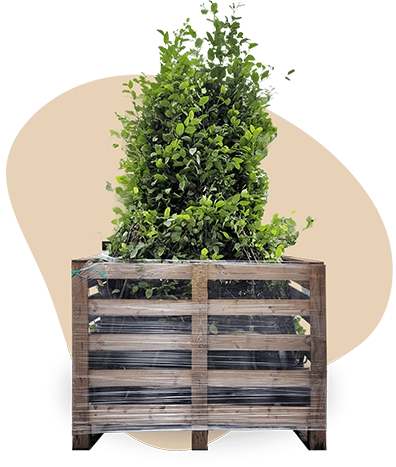
Cotoneaster dammeri 'Major' on a 120 cm stem C7,5 | Dammer's cotoneaster
Standard Dammer's cotoneaster is Cotoneaster dammeri 'Major' supplied in a standard-trained form. This evergreen shrub is also known as Dammer's cotoneaster, Bearberry cotoneaster and creeping cotoneaster. Unlike the usual low, ground-covering appearance, this plant has a raised stem that supports an elevated crown. The crown is compact, spreading and slightly overhanging, creating a clear raised silhouette in a garden or container. Its green evergreen leaves give the plant structure throughout the year. White flowers appear in May and June, followed by red berries that add further ornamental interest. The raised form makes the plant easy to appreciate from different angles, especially on a patio, balcony or in a small garden where vertical structure is useful. It can also be used as a specimen plant in a suitable pot or as part of a carefully planned garden display. The crown may need occasional pruning to keep its compact shape and defined outline. For related plants, see Cotoneaster.
Key features of Dammer's cotoneaster (Cotoneaster dammeri 'Major')
- Flowers and foliage: White flowers are a notable seasonal feature in May and June. The plant has green, evergreen leaves, so the raised crown keeps its leafy appearance through the year.
- Light and position: Choose full sun or partial shade. A sheltered position can be helpful in exposed UK sites, particularly where strong weather may affect plants in containers or raised positions.
- Soil and drainage: This cotoneaster prefers well-drained, humus-rich and lime-rich soil. Lime-rich or alkaline-leaning soil is suitable. Good drainage and an open soil structure are important, as prolonged waterlogged conditions can cause problems in the UK’s often wet climate.
- Growth and form: The standard-trained structure has a raised stem and an elevated crown with compact, spreading and slightly overhanging growth. This gives it a different character from the naturally low, creeping habit linked with the species. Its red berries provide additional colour after flowering.
- Garden category: With its evergreen foliage and white flowers, this plant is a useful choice for evergreen shrubs, especially where a raised crown is preferred over a low-growing form.
Uses for a standard Dammer's cotoneaster in the garden
- Specimen planting: Use this standard Dammer's cotoneaster as a specimen plant where its raised stem and compact crown can be viewed clearly. It brings height and structure without needing the space of a broad, low planting.
- Pots and small spaces: The raised form suits a container on a patio or balcony. It can also bring a clear focal point to a small garden, while the evergreen crown keeps the display visually present outside the flowering period.
- Seasonal interest: The evergreen foliage provides year-round structure. White flowers in May and June are followed by red berries, giving the plant more than one ornamental moment through the growing season.
- Hardiness: The supplied hardiness range is approximately -23.3°C to -17.8°C, USDA zone 6. This indicates a hardy standard-trained plant for many UK garden conditions, but local exposure and wet soil can still affect performance.
- Plant combinations: Combine it with lower-growing ornamental plants that do not hide the raised crown. It works well in container displays, patio planting, small-garden planting and specimen arrangements where the elevated crown remains visible.
The standard-trained form adds vertical definition and a compact focal point while retaining the evergreen character of Dammer's cotoneaster. It is a useful evergreen focal plant for a pot, patio, balcony or small UK garden.