Description
Cotoneaster dammeri 'Namsham' Standard | Bearberry cotoneaster
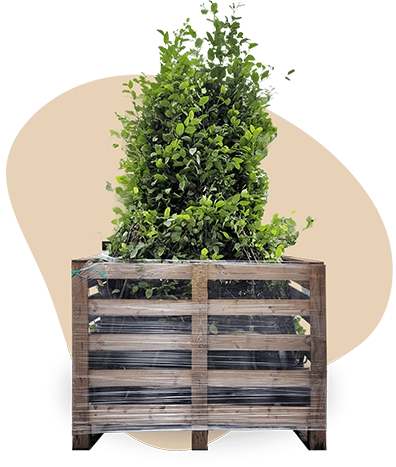
Bearberry cotoneaster standard is a compact evergreen feature with a raised crown and a clear, elevated silhouette. Cotoneaster dammeri 'Namsham' is presented as a standard, so its green evergreen foliage and spreading, slightly trailing growth sit above the main stem instead of forming a low mat at ground level. This gives the plant a more defined shape and adds height without losing the character of a ground-cover cotoneaster. Small white flowers appear in May and June, followed by ornamental red berries. The berries are not edible to humans. The standard form works well in a UK garden where a compact feature is needed for a pot, patio, balcony, border or rock garden. It can also be used as a specimen plant, where the raised crown can be seen clearly. As a shrub with ground-cover character, it offers a different look from a typical low-growing presentation. The spreading growth can soften the edge of a container or planting area, while the elevated crown creates a neat vertical accent. This bearberry cotoneaster is low maintenance and remains green through the year. It belongs to the cotoneaster genus.
Key features of bearberry cotoneaster (Cotoneaster dammeri 'Namsham')
- The small white flowers are a notable spring feature. They appear in May and June, adding seasonal interest above the compact crown.
- The foliage is green and evergreen, so the plant keeps its leafy appearance through the year. The standard structure lifts this evergreen cover into a more visible specimen form.
- Choose a position in full sun or partial shade. This makes the standard suitable for many UK garden settings, including a sheltered patio, balcony, border or rock garden.
- Use well-drained, humus-rich, slightly moist soil. Chalky or alkaline soil is suitable, but good drainage is important, especially during wet UK winters. Avoid soil that stays waterlogged for long periods.
- The growth is compact, spreading and slightly trailing. A raised crown above this habit creates a defined vertical accent while retaining the spreading character of a ground-cover cotoneaster. The plant can be included in evergreen ground covers collections.
Uses of the bearberry cotoneaster standard in the garden
- This standard form is suitable for a container, pot, patio or balcony. Its compact footprint makes it useful where space is limited, while the raised crown gives the planting a stronger three-dimensional shape.
- Use it as a specimen in a border or rock garden. The elevated crown is easy to appreciate on its own, and the spreading growth can soften the area around the base without creating the look of a large tree.
- The plant is approximately hardy from -28.9°C to -12.2°C, corresponding to USDA zones 5–8. Local exposure and winter conditions still matter, particularly in wet or exposed UK gardens.
- Combine it with low-growing perennials, ornamental grasses or other compact evergreen plants. These groups can support a layered planting design in containers, borders and rock gardens without competing with the standard’s raised crown.
- Its main ornamental value comes from several features across the seasons. The raised crown, green evergreen foliage, white flowers in May and June and red berries create interest while the compact form remains easy to place.
A bearberry cotoneaster standard is a useful choice when an evergreen feature with seasonal flowers and berries is wanted in a pot or compact garden setting.