Description
Cotoneaster suecicus 'Coral Beauty' | Swedish cotoneaster
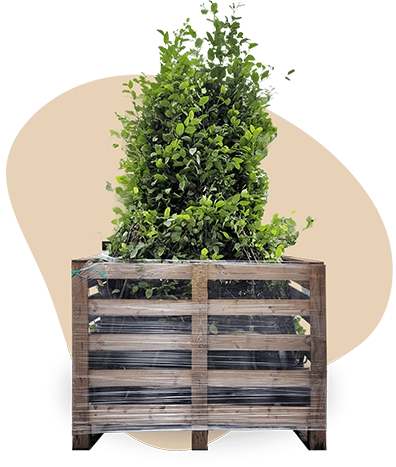
Coral Beauty cotoneaster is a spreading, low-growing Swedish cotoneaster for evergreen ground cover in UK gardens. The botanical name is Cotoneaster suecicus 'Coral Beauty', a cultivar of Cotoneaster suecicus, also known as Swedish cotoneaster. It forms a creeping and bushy ground-cover shrub rather than an upright tree or formal hedge plant. At maturity, it reaches an average height of approximately 60 cm. Its green leaves provide lasting garden structure throughout the year. White flowers appear in May and June, followed by decorative red berries. These berries are not edible for people. The plant has a low-maintenance character and is suited to gardeners looking for steady coverage with seasonal ornamental interest. Its outward-growing shape works well where a planting area needs a low, spreading form rather than a tall specimen. As part of the Cotoneaster genus, it brings together evergreen foliage, summer flowers and red berries in one compact shrub. Coral Beauty cotoneaster can be used in borders, on banks, in groups or in containers, provided the soil is well drained and the position suits its needs.
Key features of Swedish cotoneaster (Cotoneaster suecicus 'Coral Beauty')
- White flowers are produced in May and June. They add a seasonal ornamental feature to the plant, while the green evergreen foliage continues to provide structure outside the flowering period.
- The foliage is green and evergreen, helping Coral Beauty cotoneaster maintain a consistent appearance through the year. Decorative red berries follow the flowers and add further seasonal colour; they are not edible for people.
- This evergreen ground-cover shrub grows in full sun or partial shade. In exposed UK sites, a reasonably sheltered position may be more suitable than a very open location.
- Choose well-drained, humus-rich and fertile soil that is lightly moist but not waterlogged. The plant prefers alkaline or lime-rich soil, so good drainage is especially important in the variable and often wet conditions of UK gardens.
- Initial development is slow, followed by a spreading, creeping and bushy growth habit. This low, outward-growing form helps cover planting areas and banks rather than creating an upright specimen, and makes it a useful choice for evergreen ground covers.
Uses of Coral Beauty cotoneaster in the garden
- Use Coral Beauty cotoneaster as evergreen ground cover in borders, planting schemes and group planting. Its spreading, creeping habit helps create low coverage across planting areas without the upright form of a tree or formal hedge.
- It is also suitable for bank planting and containers. In a container, the bushy growth can provide a low, outward-growing feature, while on a bank it can help give the planting a continuous evergreen appearance.
- This Swedish cotoneaster is hardy to approximately -28.9°C to -23.3°C and corresponds to USDA zone 5. This makes it a useful hardy choice for many UK garden settings, while the planting position and well-drained soil remain important.
- Combine it with other ornamental border and ground-cover plants in evergreen planting schemes, mixed borders, bank planting or container displays. Broad combinations allow the green foliage, white flowers and red berries to work alongside other garden plants without making the shrub an upright focal point.
- Its main ornamental value comes from the year-round green foliage, the white flowers in May and June, the decorative red berries and the low, spreading form. Together, these features provide visual continuity with seasonal change.
Coral Beauty cotoneaster is a practical choice for gardeners seeking evergreen ground cover with seasonal flowers and red berries, especially where a low, spreading shrub is needed for borders, banks, groups or containers.