Description
Cotoneaster suecicus 'Juliette' standard tree 60 cm trunk height C4 | Cotoneaster
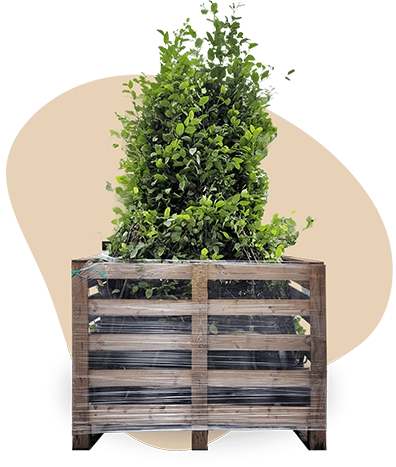
A standard Cotoneaster brings the distinctive form of Cotoneaster suecicus 'Juliette' into a raised, space-saving shape. This standard-trained plant has a clear stem with a compact, spreading crown carried above the ground. Its gently overhanging growth creates a softer outline than a naturally trailing or creeping cotoneaster. The green leaves have attractive white variegation, giving the plant year-round interest as an evergreen Cotoneaster. White flowers appear in May and June, followed by ornamental red berries. The berries are not edible. The raised crown makes this Cotoneaster easy to enjoy in a pot on a UK patio or balcony, in a border, or as a specimen plant near a terrace or entrance. It also gives the plant a distinct silhouette compared with a low-growing form, while keeping the ornamental foliage at a useful viewing height. As a member of the cotoneaster genus, it combines evergreen foliage with seasonal flowers and berries. No exact mature height or width is specified, so its final size should not be assumed from the standard form alone.
Key features of Cotoneaster (Cotoneaster suecicus 'Juliette')
- Evergreen variegated foliage: The plant keeps its green-and-white variegated foliage throughout the year. The foliage is carried above the stem, where the light colouring can be clearly seen in a container, border or specimen setting.
- Seasonal flowers and berries: White flowers appear in May and June and add a clear seasonal feature. They are followed by ornamental red berries, which extend the display later in the year and are not edible.
- Light and soil: This standard-trained Cotoneaster suits full sun or partial shade. Use well-drained, humus-rich soil that contains lime and stays slightly moist, but does not remain wet for long periods. Good drainage and an open soil structure are important, especially in containers.
- Compact raised form: A raised stem carries the compact, spreading and gently overhanging crown. This gives a different outline from a low, trailing Cotoneaster and makes the plant a useful choice for evergreen shrubs collections, patios and smaller garden spaces. A sheltered position is useful when growing it in a container.
Uses of standard Cotoneaster in the garden
- Pot and patio planting: The standard form works well in a pot on a patio or balcony. The stem lifts the green-and-white crown into view, making use of vertical space without needing a large planting footprint.
- Border or specimen feature: Use this standard Cotoneaster as a specimen plant in a border, or as a raised accent near a terrace or entrance. Its compact, spreading crown adds structure, while the gently overhanging growth softens the outline.
- Hardiness: The plant has a stated tolerance of approximately -23.3°C to -17.8°C and is associated with USDA zone 6. Local UK conditions and garden microclimates can vary, so good drainage remains important in mild, wet weather.
- Plant combinations: Combine the raised crown with low-growing perennials, compact grasses or seasonal container plants. Choose companions that leave the variegated foliage and overhanging shape visible rather than obscuring the crown.
- Ornamental value: Evergreen foliage provides a lasting green-and-white display, while the white flowers in May and June and red berries add seasonal change. The standard-trained structure gives these features a clear position above the stem.
This standard Cotoneaster is a practical choice for adding evergreen colour, seasonal berries and raised structure to a patio, balcony, border or other well-drained garden setting.