Description
Cotoneaster procumbens 'Queen of Carpets' standard tree 40 cm stem C4 | Creeping cotoneaster standard
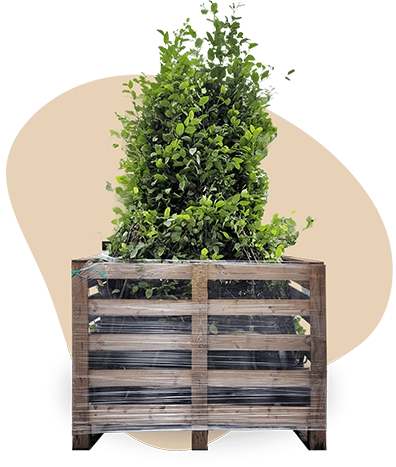
The creeping cotoneaster standard is Cotoneaster procumbens ‘Queen of Carpets’ presented in standard form, also known as a dwarf cotoneaster on stem. A raised stem lifts the evergreen, spreading and slightly trailing growth above the ground. This creates a compact ornamental crown with a clear silhouette, rather than showing the cultivar only as a low ground cover. The green foliage gives the plant a lasting presence throughout the year. White flowers add seasonal interest, followed by red berries. These berries are not edible. The cultivar name ‘Queen of Carpets’ remains unchanged, while the standard form gives its naturally spreading character a more structured garden role. It can be used as a focal plant in a container, where the raised crown is easy to see, or as a small ornamental feature in a border. It also suits patios and well-drained areas in UK gardens. This is a low-maintenance choice for gardeners who want evergreen interest without losing the softer look of trailing growth. As part of the cotoneaster group, it combines ground-cover character with the lifted appearance of a standard plant. No exact mature height or width is specified, so its final size should not be judged from a stated measurement alone.
Key features of the creeping cotoneaster standard (Cotoneaster procumbens ‘Queen of Carpets’)
- The standard form has a raised stem carrying a spreading, slightly trailing evergreen crown. This lifted presentation gives the plant a clear ornamental shape above the ground, while retaining the low-growing character of ‘Queen of Carpets’.
- Green evergreen foliage provides year-round colour. White flowers appear in May and June, adding a light seasonal feature to the crown. Red berries follow as ornamental fruit, but they are not edible.
- Choose full sun or partial shade. In the UK, good drainage is especially important where winters can be wet. Use open, well-drained soil and avoid prolonged waterlogging.
- Well-drained, humus-rich and slightly moist soil is suitable, including lime-rich soil. The soil should remain open rather than becoming heavy and waterlogged. This makes the plant a useful option for a evergreen plants collection where drainage can be provided.
- The growth is spreading and slightly trailing, but the raised stem changes how the plant is seen and used. It creates a lifted focal point for containers, patios and borders without turning the plant into a conventional full-sized tree.
Uses of the creeping cotoneaster standard in the garden
- Use this creeping cotoneaster standard in containers, borders, rock gardens and group planting. The raised stem allows the crown to be displayed clearly, making it suitable for places where a low plant might otherwise be hidden by surrounding growth.
- It works well as a specimen plant when its form can be viewed from different angles. The lifted crown adds vertical structure, while the spreading and slightly trailing growth keeps the outline relaxed and close to the character of the cultivar.
- The plant is hardy to approximately -28.9°C to -23.3°C and is listed as USDA zone 5. Hardiness does not remove the need for suitable conditions, so well-drained soil remains important in the UK’s wetter climate.
- Combine it with low-growing plants for well-drained sites, provided they do not conceal the stem or cover the spreading crown. It can sit naturally among border plants, rock-garden planting or other plants in a container display.
- Its main ornamental value comes from the combination of evergreen foliage, white flowers, red berries and a raised standard silhouette. This gives year-round structure, with extra interest in the flowering and fruiting periods.
The standard form adds a clear focal point without losing the spreading nature of ‘Queen of Carpets’. This evergreen standard is an attractive choice for adding structure and year-round interest to a well-drained container, border or rock-garden setting.