Description
Hamamelis intermedia 'Arnold Promise' half-standard 120 cm C10 | Witch hazel
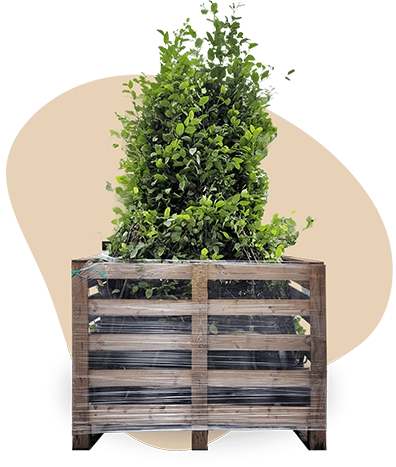
A half-standard witch hazel brings the winter interest of Hamamelis intermedia 'Arnold Promise' into a more defined garden shape. The clear stem lifts the crown above ground level, creating a distinct silhouette compared with a witch hazel shrub that grows from the base. The raised crown keeps its upright and bushy character, while the open space beneath gives the plant a lighter lower profile. This deciduous shrub is known for its fragrant yellow flowers in winter, with flowering from January to March. It carries green foliage during the growing season, followed by attractive yellow, orange and red autumn colour. At maturity, it reaches approximately 4 metres, so it needs sufficient space as it develops, although no exact mature width is specified. The half-standard form provides structure without looking like a naturally bushy shrub. It works well as a visible ornamental feature in a sunny or partially shaded part of a UK garden. As a member of the hamamelis genus, this witch hazel offers seasonal interest across winter, summer and autumn. 'Arnold Promise' is especially valued for its yellow, fragrant flowers in the colder months.
Key features of witch hazel (Hamamelis intermedia 'Arnold Promise')
- Fragrant winter flowers: Abundant yellow flowers are a major ornamental feature. They appear from January to March, bringing colour and fragrance to the garden when many deciduous plants are bare.
- Seasonal foliage: The leaves are green during the growing season. Their exact shape is not specified, but the deciduous foliage contributes to the summer crown before changing to yellow, orange and red in autumn.
- Light and soil: Position this half-standard witch hazel in full sun or partial shade. It prefers humus-rich, well-drained and lightly moist soil that is acidic to neutral. Avoid waterlogged conditions while allowing good air and water movement through the soil.
- Distinctive growth form: A clear stem raises the upright, bushy crown above the ground. This creates a more open lower profile and a clear specimen shape, with enough room needed for the plant to mature.
- UK garden position: A sheltered position can be practical for a raised crown, particularly in the often wet and changeable UK climate. The plant is best used where its form can be seen clearly rather than hidden among dense planting. It is a deciduous broadleaf shrub, not an evergreen plant.
- Flowering shrub category: With its yellow flowers and seasonal display, it fits naturally within yellow-flowering shrubs. No specific wildlife value, toxicity information or suitability beside hard surfacing is supplied.
Uses of half-standard witch hazel in the garden
- Specimen planting: Use this half-standard witch hazel as a specimen plant where the raised crown can be viewed from different angles. The clear stem and elevated canopy create vertical structure and a distinctive silhouette.
- Borders and group planting: It can be placed in a border or used in group planting where there is sufficient space for the mature plant. Its open lower profile gives lower planting more visual room around the stem and beneath the crown.
- Container use: This form can also be used in a suitably spacious container. The container position should provide full sun or partial shade and soil that remains lightly moist but well drained.
- Winter hardiness: The supplied hardiness range is approximately -28.9°C to -12.2°C, corresponding to USDA zones 5 to 8. This is general hardiness information, not a guarantee for every UK garden or site.
- Combinations: The raised crown can work well with compatible border plants, lower-growing shrubs or perennials around or beneath it. Any combination should suit humus-rich, acidic to neutral soil that is well drained and lightly moist.
- Seasonal value: The main appeal is the combination of fragrant yellow winter flowers, an elevated crown, green summer foliage and yellow, orange and red autumn colour. Choose this form when you want the seasonal interest of witch hazel with a clearly raised ornamental shape.
This half-standard form is especially suitable for gardeners seeking winter colour, fragrance and a raised ornamental silhouette in a well-positioned garden space.