Description
Cornus kousa 'Teutonia' shrub 175-200 cm C25 | Kousa dogwood
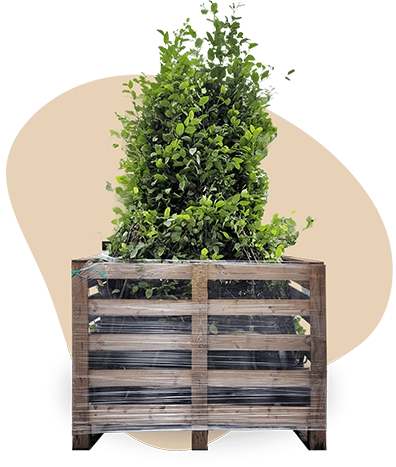
Kousa dogwood shrub Cornus kousa 'Teutonia' is a flowering Kousa dogwood supplied in shrub form. Also known as Japanese dogwood, it develops an upright, bushy habit with branches starting close to the ground. This creates a full ornamental silhouette rather than a raised tree crown. The shrub reaches approximately 4 metres at maturity, so it needs enough room for its natural development in a UK garden. Its green foliage provides a fresh summer background before changing to attractive red and orange autumn colour. As a deciduous broadleaf shrub, it loses its leaves in winter and reveals more of its branching structure. White flowers appear in May and June, followed by conspicuous red fruits that add further seasonal interest. The slow growth of this cultivar makes its development gradual, while its full shape gives it a clear presence even before it reaches mature height. Use it as a specimen where the whole shrub can be viewed, or place it within a suitable border. The near-ground branching is an important feature of this product, as it gives the plant a substantial, bushy appearance rather than the elevated form associated with a high trunk. As part of the cornus range, this Cornus kousa 'Teutonia' shrub combines flowering, fruit display and autumn colour in one seasonal garden feature.
Key features of Kousa dogwood (Cornus kousa 'Teutonia')
- Flowering: This Japanese dogwood produces notable ornamental flowers in late spring and early summer. The white flowers appear in May and June and stand out clearly against the green foliage.
- Foliage and seasonal interest: The foliage is green during the growing season. In autumn, it develops attractive red and orange colour. The ornamental red fruits extend the seasonal display and may provide interest for garden wildlife.
- Position: Choose full sun or partial shade. A sheltered position is useful in exposed UK gardens, especially where strong winds are common. This allows the upright, bushy structure to form a clear visual feature.
- Soil: Plant in humus-rich, well-drained soil that is slightly moist and slightly acidic. The soil should have good aeration. Avoid prolonged drought, while also avoiding waterlogged conditions, so that moisture remains light and even.
- Growth and form: This shrub grows slowly and reaches approximately 4 metres when mature. It develops a full shrub silhouette from near ground level, rather than a raised trunk and elevated crown. This makes it a strong choice for a white flowering shrub collection or a considered border design.
Uses for the Kousa dogwood shrub in the garden
- Specimen planting: Use this Kousa dogwood shrub as a specimen plant in a spacious part of the garden. Its upright, bushy structure gives a fuller and lower visual presence than a raised tree-form plant, while the white flowers, red fruits and autumn colour provide interest across several seasons.
- Mixed borders: The shrub works as a substantial ornamental anchor within a mixed border. Its near-ground branching fills the space with a rounded, bushy outline, rather than leaving an open area beneath a high crown. Allow enough room for its mature height of approximately 4 metres.
- Group planting: Group planting can create a stronger seasonal display where there is sufficient space for mature development. Use it alongside ornamental shrubs, flowering perennials and structural border plants with similar preferences for sun or partial shade and humus-rich, well-drained soil.
- Hardiness: The plant is hardy to approximately -23.3°C to -17.8°C and is listed as USDA zone 6. This provides useful guidance for UK gardeners, although local exposure and garden conditions still matter, particularly in sites affected by strong winds.
- Ornamental value: The main garden appeal comes from the combination of white flowers in May and June, green summer foliage, conspicuous red fruits and red-orange autumn colour. The shrub form keeps these features within a full, clearly defined garden silhouette.
Choose the Kousa dogwood shrub for a spacious border or specimen position where its flowering, fruits and autumn colour can be appreciated through the seasons.